
Did you know nearly 1 in 5 Australians under 25 require orthodontic treatment for bite issues? Among these, Class II malocclusion – where the upper teeth jut forward – ranks as one of the most common yet challenging conditions to address. This mismatch not only affects chewing and speech but can lead to long-term jaw discomfort if left untreated.
Modern orthodontics offers targeted solutions for such cases. One advanced approach combines traditional braces with a specialised spring-loaded system designed to gently reposition the lower jaw. Unlike older methods, this device works continuously, requiring fewer manual adjustments while delivering precise results.
Patients often see noticeable improvements within 3-6 months, making it a practical choice for teens and adults alike. The appliance integrates seamlessly with existing braces, focusing on gradual alignment without invasive procedures. Its low-profile design also minimises impact on daily activities, from eating to oral hygiene routines.
Key Takeaways
- Targets upper jaw protrusion through controlled pressure
- Works alongside braces for comprehensive treatment
- Requires minimal adjustments after initial fitting
- Suitable for patients aged 12+ with moderate-severe cases
- Reduces treatment time compared to alternatives
Introduction to Forsus Springs and Class II Bite Correction
Severe overbites affect more than just appearance—they can lead to chronic pain and eating difficulties. Class II malocclusion, where upper teeth protrude significantly, remains a top concern for Australian orthodontists. Traditional methods often relied on bulky headgear, but modern approaches prioritise discretion and comfort.
Today’s solutions combine standard braces with a compact spring-loaded appliance. This system applies steady pressure to guide jaw alignment naturally. Unlike older techniques, it works 24/7 without requiring patient compliance or frequent adjustments.
| Feature | Traditional Methods | Modern Systems |
|---|---|---|
| Visibility | External headgear | Low-profile design |
| Adjustments | Weekly visits | Every 6-8 weeks |
| Comfort | Rubber bands | Smooth springs |
The integration with braces allows simultaneous teeth straightening and jaw correction. Most patients adapt within weeks, maintaining normal eating and oral care routines. This dual-action appliance typically reduces treatment time by 30% compared to older methods.
Early intervention proves crucial—untreated cases often develop TMJ disorders or uneven wear on teeth. Modern orthodontics makes effective correction achievable without sacrificing lifestyle or confidence.
Understanding Forsus Springs for Orthodontic Treatment
Today’s orthodontic solutions blend precision engineering with patient-centred design to address bite issues effectively. These systems use specialised components like telescoping rods and calibrated springs
The appliance applies steady pressure through its spring mechanism, encouraging natural skeletal adjustment over months. Each component is designed to work with existing braces, targeting both teeth positioning and jaw relationship simultaneously. This dual-action approach helps reduce treatment timelines by up to 40% compared to older methods.
| Feature | Traditional Systems | Modern Design |
|---|---|---|
| Force Control | Manual adjustments | Self-adjusting springs |
| Material Durability | Prone to wear | Medical-grade alloys |
| Comfort Level | Frequent irritation | Rounded edges |
Orthodontists tailor the appliance‘s settings based on individual needs, modifying force direction as treatment progresses. The springs maintain consistent pressure without daily intervention, making them ideal for busy teens and adults alike.
Patients receive clear guidance about how the system influences their teeth and jawbone. This understanding helps them stay committed to their treatment plan, ensuring optimal results with minimal discomfort.
Preparing for Your Forsus Springs Treatment
Successful orthodontic care begins with careful planning. Before adding the corrective system, your specialist will verify your braces are positioned correctly and assess your teeth alignment. This groundwork ensures the appliance functions as intended while minimising discomfort.
What to Expect at Your Appointment
Your initial visit focuses on customising the treatment plan. The orthodontist will:
- Examine bracket placement and archwire tension
- Take digital scans to map jaw relationships
- Demonstrate how the system interacts with your braces
Arrive 10 minutes early and eat a light meal beforehand—installation often takes 45-60 minutes. You’ll receive a printed guide detailing cleaning techniques and adjustment schedules.
| Preparation Step | Purpose |
|---|---|
| Bracket realignment | Creates optimal force distribution |
| Interproximal reduction | Creates space for appliance arms |
| Wax demonstration | Prevents cheek irritation |
Getting Ready for the Appliance
Soft foods become essential for the first week. Stock up on yoghurt, mashed vegetables, and protein shakes. Use an interdental brush to clean around the appliance daily—this prevents plaque buildup near your teeth.
Your orthodontic team will schedule follow-up appointments every 6-8 weeks. These check-ins monitor progress and make minor tweaks to the system’s pressure levels.
How Forsus Springs Work: Mechanics and Benefits
Behind every effective bite correction system lies precise mechanical design. These devices use physics to guide natural jaw movement, blending engineering with orthodontic science. The result? A smoother path to proper alignment that works with your body’s biology.
Appliance Design and Function
The core of this approach involves telescoping parts that adjust as treatment progresses. A built-in spring stores energy when compressed, releasing gentle pressure to reposition the lower jaw. This continuous force remains active during eating and speaking, making every movement part of the correction process.
Unlike rigid systems, the appliance adapts to growth changes in younger patients. Its low-profile structure avoids interference with daily activities while maintaining therapeutic effectiveness. Most users report minimal disruption to their routines after the initial adjustment period.
Key advantages include:
- 30-50% faster results compared to elastic-based methods
- Reduced cheek irritation through rounded edges
- Automatic force adjustments as alignment improves
By working with natural jaw motion, the system encourages proper muscle development. This dual focus on skeletal and soft tissue alignment often leads to better facial symmetry and chewing efficiency over time.
Step-by-Step Guide to Installing and Adjusting Forsus Springs
Proper installation ensures your orthodontic system works effectively while keeping discomfort manageable. Specialists follow a meticulous process to integrate the appliance with existing braces, prioritising both precision and comfort.
Fitting the Appliance with Braces
Your orthodontist first checks bracket alignment and wire tension. This ensures the system applies force correctly. Key steps include:
- Measuring jaw relationships using 3D scans
- Attaching customised arms to upper and lower brackets
- Testing spring tension for optimal pressure
The process takes about an hour. Most patients describe it as similar to routine brace adjustments.
Managing Initial Cheek Discomfort
Mild irritation near the cheeks is common initially, much like when braces were first fitted. Try these proven strategies:
- Apply orthodontic wax to protruding parts
- Rinse with warm salt water 3x daily
- Choose soft foods for the first 5-7 days
“Stick to lukewarm soups and smoothies initially—it makes a real difference,” advises Dr. Sarah Nguyen from Sydney Orthodontic Specialists. Most patients adapt fully within two weeks as the cheeks toughen naturally.
Your care team will schedule check-ups to monitor progress and adjust tension if needed. Consistent care minimises discomfort while keeping treatment on track.
Troubleshooting Common Issues with Forsus Springs
Even well-designed correction systems occasionally need minor adjustments. Knowing how to handle small hiccups keeps treatment on track and prevents discomfort. Most issues involve components temporarily shifting out of place – easily fixed with simple techniques.
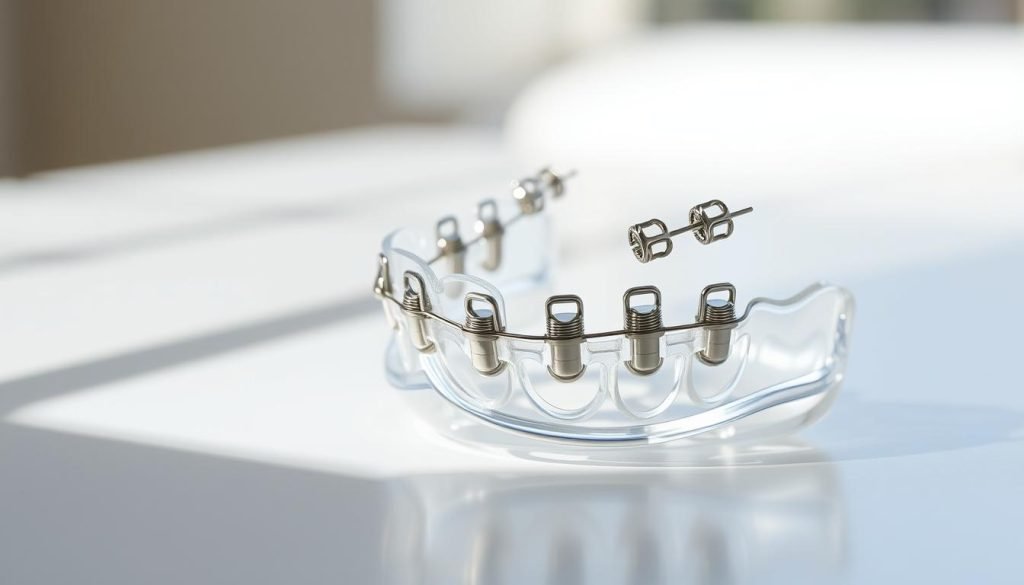
Realigning Arms and Parts
If two parts of the appliance separate, open your mouth wide. Gently guide the arms back into alignment – they should click together smoothly. Avoid forcing them, as bent components require professional attention.
| Issue | DIY Fix | Professional Help Needed? |
|---|---|---|
| Separated arms | Realign with mouth open | If resistance persists |
| Bent components | Secure with floss | Yes – next appointment |
| Detached spring | Store safely | Bring to clinic |
When to Secure with Floss and Seek Help
Persistent alignment issues often signal bent arms. Tie each section to nearby brackets using unwaxed floss. This temporary fix prevents irritation while waiting for adjustments. Always save detached spring portions – your specialist can reattach them quickly.
Regularly check parts during oral care routines. Early detection of loose brackets or worn components reduces emergency visits. Most patients master these troubleshooting steps within weeks, maintaining progress between appointments.
Comparing Forsus Springs with Traditional Braces
Orthodontic care in Australia now prioritises dual-action correction systems that tackle both teeth alignment and jaw positioning. Traditional braces excel at straightening crooked smiles but often struggle with underlying skeletal imbalances. This limitation leaves many patients needing secondary treatments for persistent overbites or chewing difficulties.
Modern solutions combine standard braces with a fixed appliance that guides jaw movement. This approach addresses dental and skeletal issues simultaneously, unlike older methods requiring separate treatment phases. “Patients appreciate finishing their correction in one coordinated process,” notes a Melbourne orthodontist.
| Feature | Braces Only | Combined System |
|---|---|---|
| Treatment Focus | Tooth positioning | Teeth + jaw alignment |
| Compliance Needs | Elastic bands | Automatic adjustment |
| Aesthetics | Visible brackets | Low-profile design |
| Average Duration | 24-36 months | 12-18 months |
The integrated system works continuously without removable parts, ensuring consistent progress. Patients avoid the social discomfort of headgear while achieving better facial symmetry. For moderate-severe cases, this method often reduces treatment time by 40% compared to traditional approaches.
By focusing on both teeth and jaw relationships, modern orthodontics delivers lasting results. This comprehensive strategy prevents future issues like uneven enamel wear, making it a preferred choice for Australian practitioners and families alike.
Tips for a Smooth Adjustment to Your Forsus Springs
Adapting to orthodontic appliances becomes easier with practical daily strategies. Simple changes to routines help maintain comfort while keeping treatment on track. Focus on two key areas: consistent care habits and gradual adaptation techniques.
Daily Care and Maintenance
Clean around appliance components using an angled brush and fluoride rinse. Pay extra attention to the cheeks and gumline where food particles collect. “Interdental brushes work wonders for hard-to-reach spots,” suggests a Brisbane orthodontic nurse.
Swap sticky or crunchy foods for softer options during the first month. This reduces pressure on your mouth while preventing damage to the system. Schedule check-ins every 6 weeks to address emerging concerns quickly.
Making the Transition Easier
Initial discomfort often peaks within 72 hours. Apply chilled spoons to sore areas and practice gentle jaw exercises. Most patients find speech improves dramatically after 10-14 days of consistent practice.
Monitor your cheeks for redness using a mirror during morning routines. Orthodontic wax creates a protective barrier against friction points. If irritation persists beyond two weeks, request a component adjustment at your next visit.
| Care Focus | Action |
|---|---|
| Oral Hygiene | 3-minute brush after meals |
| Diet | Steamed veggies > raw carrots |
| Discomfort Management | Salt rinses + soft foods |
Track changes in your mouth using progress photos. This visual record helps identify improvements and spot potential issues early. Consistent care routines typically reduce overall treatment time while minimising discomfort.
Conclusion
Modern orthodontic solutions have transformed Class II bite correction, blending precision engineering with patient-focused design. Forsus systems enhance facial symmetry while improving chewing function, addressing both aesthetics and long-term oral health. This dual approach has become a preferred choice in Australian practices for its efficiency and comfort.
Successful outcomes rely on commitment throughout each portion of care. Patients who understand their appliance’s role and maintain cleaning routines see fewer complications. Minor issues often resolve quickly, especially when addressed during scheduled appointments.
Investing in modern treatment methods delivers benefits beyond straighter teeth. These systems require only a small portion of clinic visits compared to traditional techniques. As the gold standard, Forsus technology combines advanced mechanics with personalised care—proving effective for lasting results in teens and adults alike.